Deep and durable responses seen in the primary analysis1
Across all cohorts, ≥72% of patients responded to TALVEY®.
T-cell redirection–naïve Q2W
ORR
73.6%
n=87
(95% CI, 63.0%–82.4%)
- mDOR not estimable
- Median follow-up: 5.9 months (range: 0–9.5 months)
T-cell redirection–naïve QW
ORR
73%
n=100
(95% CI, 63.2%–81.4%)
- mDOR: 9.5 months (95% CI, 6.5 months–NE)
- Median follow-up: 13.8 months (range: 0.8–15.4 months)
- 59.0% ≥9-month DOR rate
- Median follow-up: 10.4 months
T-cell redirection–exposed
ORR
72%
n=32
(95% CI, 53%–86%)
- 59.0% ≥9-month DOR rate
- Median follow-up: 10.4 months
- mDOR: 9.5 months (95% CI, 6.5 months–NE)
- Median follow-up: 13.8 months (range: 0.8–15.4 months)
Response rates at a median follow-up of >30 months in the MonumenTAL-1 longer-term follow-up analysis2
You are now viewing a subsequent follow-up analysis of the MonumenTAL-1 trial. This information is not included in the current full Prescribing Information. These longer-term follow-up data reflect the patients naïve to T-cell redirection therapy receiving TALVEY® Q2W; any increase in n value is due to this longer-term follow-up and additional patients.
Efficacy was based on ORR and DOR as assessed by an IRC using IMWG criteria.
Response rates (n=90)
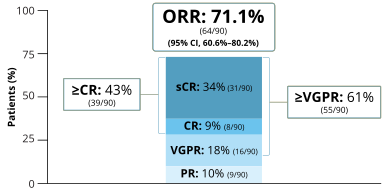
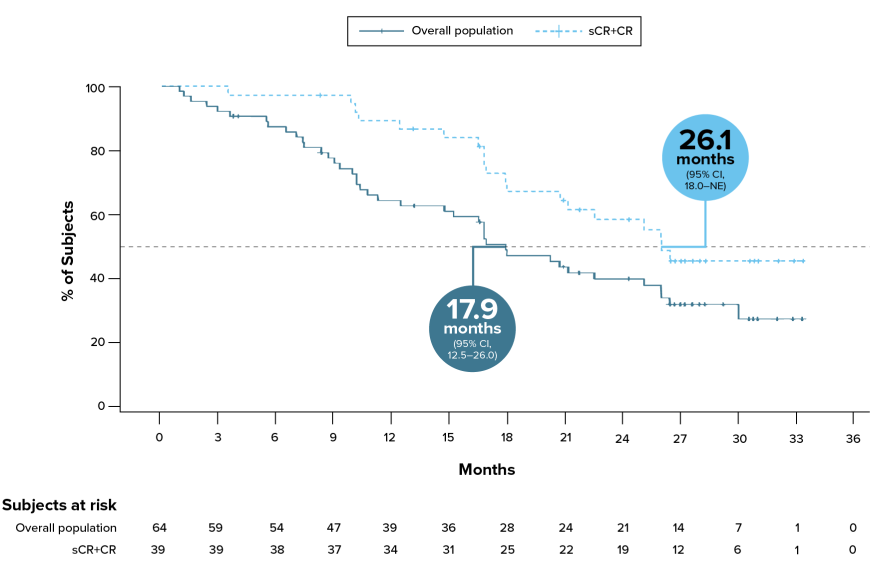
Median time to response
(range: 0.2–3.6 months)
Median time to CR
(range: 1.2–13.1 months)
- mDOR for patients who achieved VGPR: 9.3 months (95% Cl, 7.4–15.2 months)
- mDOR for patients who achieved PR: 5.5 months (95% Cl, 0.9–6.5 months)
Response rates in difficult-to-treat T-cell redirection–naïve patients treated with TALVEY®2
Difficult-to-treat patients included:
- Patients aged ≥70 years
- Patients who moved on rapidly from their last treatment
- Patients with high-risk cytogenetics
- Patients with ≥60% bone marrow plasma cell burden
- Patients with ISS stage 3 disease
- Patients with extramedullary disease
Efficacy was based on ORR and DOR as assessed by an IRC using IMWG criteria. All data are from patients who received Q2W dosing.
Response rates in older patients treated with TALVEY®2
Patients aged ≥70 years (n=38)
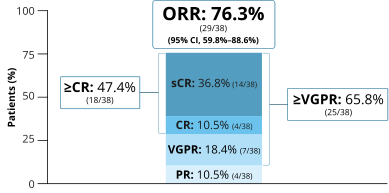
The median duration of response was 20.3 months (95% CI, range: 10.3–30.1 months).
Response rates in T-cell redirection–naïve patients who rapidly moved on from their previous treatment2
Patients who started their prior line of therapy ≤6 months earlier (n=32)
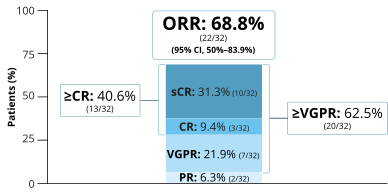
The median duration of response was 16.8 months (95% CI, range: 9.9 months–NE).
Response rates in T-cell redirection–naïve patients with a variety of high-risk characteristics2
Patients with high-risk cytogenetics (t[4:14], t[14:16], and/or del[17p]) (n=22)
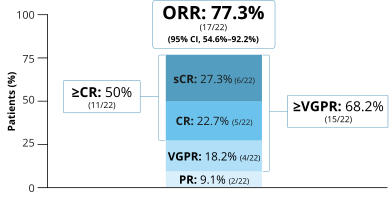
The median duration of response was 17.9 months (95% CI, range: 10.2 months–NE).
Patients with ≥60% bone marrow plasma cell burden (n=24)
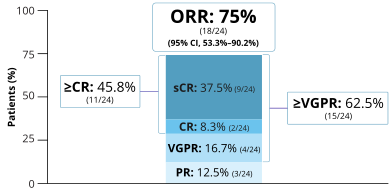
The median duration of response was 12.5 months (95% CI, range: 9.3 months–NE).
Patients with ISS stage 3 disease (n=23)
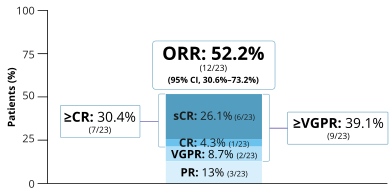
The median duration of response was 14.5 months (95% CI, range: 1.1–26.0 months).
Patients with extramedullary disease (n=20)
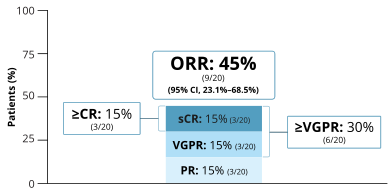
The median duration of response was 16.9 months (95% CI, range: 0.9 months–NE).
Response rates in T-cell redirection–exposed patients who received TALVEY® in a longer-term follow-up analysis2
You are now viewing a subsequent follow-up analysis of the MonumenTAL-1 trial. This information is not included in the current full Prescribing Information. These longer-term follow-up data reflect the patients exposed to T-cell redirection therapy receiving TALVEY® QW; any increase in n value is due to this longer-term follow-up and additional patients.
Response rates at a median follow-upof >28 months in the MonumenTAL-1 longer-term follow-up analysis2
Efficacy was based on ORR and DOR as assessed by an IRC using IMWG criteria.
Response rates (n=58)
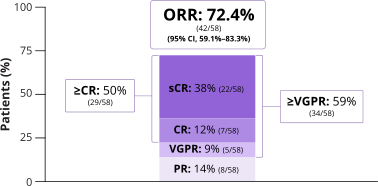
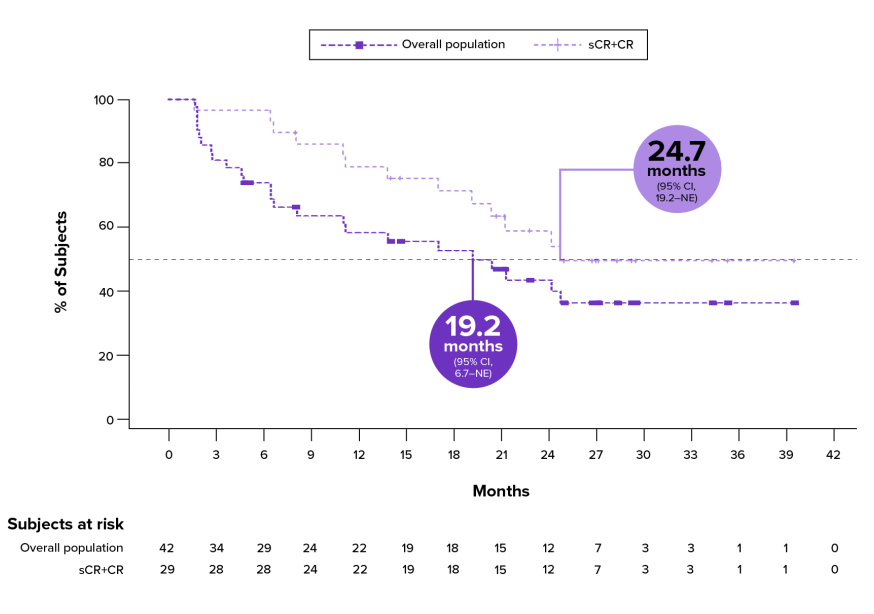
Median time to response
(range: 0.2–7.5 months)
Median time to CR
(range: 1.0–12.9 months)
- mDOR for patients who achieved VGPR: 4.8 months (95% Cl, 2.1 months–NE)
- mDOR for patients who achieved PR: 2.4 months (95% Cl, 1.9–4.6 months)
Response rates in patients previously exposed to BCMA-targeting treatments2
Previously exposed patients included:
- Patients exposed to CAR-T treatment
- Patients exposed to a bispecific antibody treatment
- Patients exposed to an ADC treatment
Response rates in patients previously exposed to CAR-T treatment who received TALVEY®2
Efficacy was based on ORR and DOR as assessed by an IRC using IMWG criteria. Data are from patients who received QW dosing.
Patients with prior exposure to CAR-T treatment (n=45)
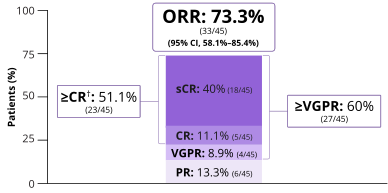
The median duration of response was 20.4 months (95% CI, range: 8.1 months–NE).
Response rates in patients previously exposed to treatment with a bispecific antibody who received TALVEY®2
Efficacy was based on ORR and DOR as assessed by an IRC using IMWG criteria. Data are from patients who received QW dosing.
Patients with prior exposure to a bispecific antibody treatment (n=17)
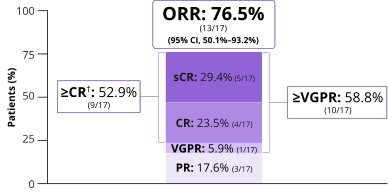
The median duration of response was 8.1 months (95% CI, range: 2.0 months–NE).
Response rates in patients previously exposed to ADC who received TALVEY®2
Efficacy was based on ORR and DOR as assessed by an IRC using IMWG criteria. Data are from patients who received both QW and Q2W dosing.
Patients with prior exposure to an ADC treatment (n=45)
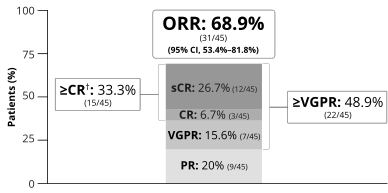
The median duration of response was 9.3 months (95% CI, range: 4.4–22.8 months).
- T-cell redirection–naïve Q2W cohort: 69.2% ORR (n=9/13)
- 38.5% sCR; 0% CR; 23.1% VGPR; 7.7% PR
- DOR was 9.9 months (95% CI, range: 3.5 months–NE)
- T-cell redirection–naïve QW cohort: 71.4% ORR (n=15/21)
- 19.0% sCR; 4.8% CR; 14.3% VGPR; 33.3% PR
- DOR was 4.4 months (95% CI, range: 1.9–30.4 months)
- T-cell redirection–exposed cohort: 63.6% ORR (n=7/11)
- 27.3% sCR; 18.2% CR; 9.1% VGPR; 9.1% PR
- DOR was 20.4 months (95% CI, range: 2.7 months–NE)
*Four patients, who were previously exposed to both BCMA CAR-T therapy and treatment with a BCMA bispecific antibody, are included in both the CAR-T and bispecific antibody treatment bar graphs above.
†≥CR: sCR+CR.
Response rates in T-cell redirection–naïve patients (QW) who received TALVEY® in a longer-term follow-up analysis2
You are now viewing a subsequent follow-up analysis of the MonumenTAL-1 trial. This information is not included in the current full Prescribing Information. These longer-term follow-up data reflect the patients naïve to T-cell redirection therapy receiving TALVEY® QW; any increase in n value is due to this longer-term follow-up and additional patients.
Response rates at a median follow-upof >37 months in the MonumenTAL-1 longer-term follow-up analysis2
Efficacy was based on ORR and DOR as assessed by an IRC using IMWG criteria.
Response rates (n=100)
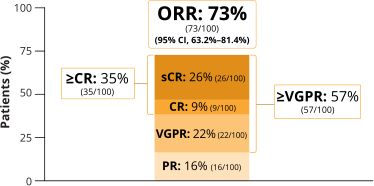
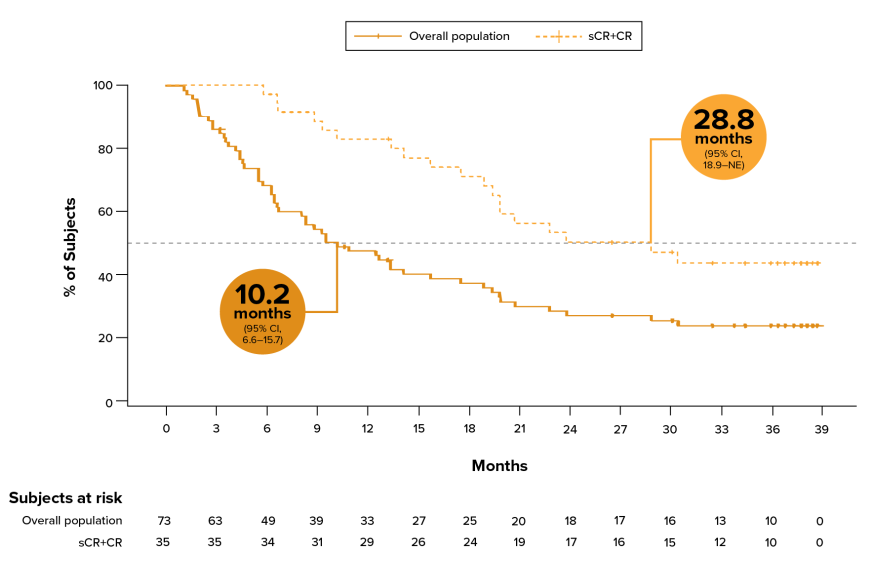
Median time to response
(range: 0.2–10.9 months)
Median time to CR
(range: 1.1–12.2 months)
- mDOR for patients who achieved VGPR: 6.4 months (95% Cl, 4.4–9.5 months)
- mDOR for patients who achieved PR: 3.0 months (95% Cl, 1.9–5.6 months)
ADC, antibody-drug conjugate; BCMA, B-cell maturation antigen; CAR-T, chimeric antigen receptor T-cell; CI, confidence interval; CR, complete response; DOR, duration of response; IMWG, International Myeloma Working Group; IRC, Independent Review Committee; ISS, International Staging System; mDOR, median duration of response; NE, not estimable; ORR, overall response rate; PR, partial response; QW, once weekly; Q2W, every 2 weeks; sCR, stringent complete response; VGPR, very good partial response.
Speak with a TALVEY® representative to learn more
A critical target in RRMM
See TALVEY® safety data
- TALVEY® [Prescribing Information]. Horsham, PA: Janssen Biotech, Inc.
- Data on file. Janssen Biotech, Inc.